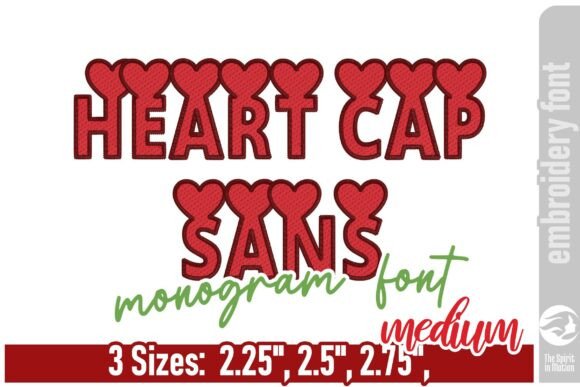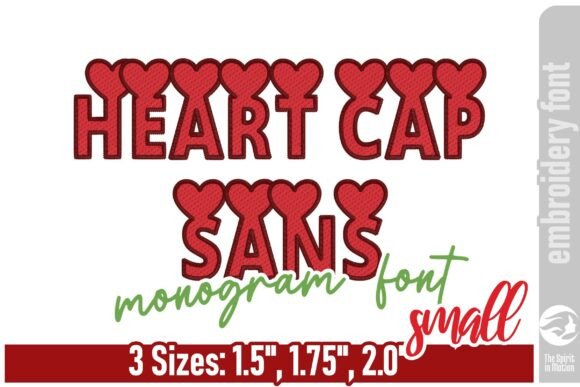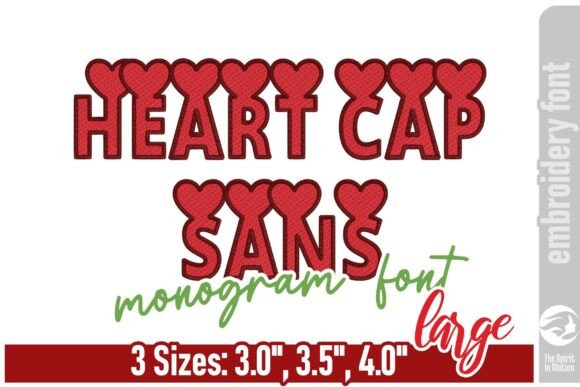
Heart Cap Sans Monogram Font – Large
A Professional Embroidery Designer’s Real-World Review
As an embroidery designer who’s digitized over 2,000 small business assets—from café aprons to florist tote bags—I approached Heart Cap Sans Monogram Font – Large with both excitement and scrutiny. The promise of a “high-impact, uppercase block font” with a “charming heart accent integrated into the top of every letter” immediately signals warmth and intentionality—qualities that resonate deeply with handmade brands, local boutiques, and service-based studios. But in commercial embroidery, charm must coexist with clarity, durability, and scalability. Here’s how Heart Cap Sans Monogram Font – Large holds up—not as a decorative flourish, but as functional brand infrastructure.
First Impression: Friendly Boldness, Not Cutesy Clutter
This isn’t a script font masquerading as Valentine’s Day ephemera. It’s a confident, uppercase sans serif—clean-lined, grounded, and instantly legible at a glance. The heart accent isn’t tacked on; it’s integrated—a subtle yet unmistakable signature built into the cap height of each letter. That integration is critical: it avoids visual competition between shape and symbol. The result feels modern and approachable—ideal for a pet brand wanting sincerity without saccharine, or a bakery seeking warmth without whimsy. It reads as handmade product authenticity, not mass-produced greeting card energy.
Where It Shines in Small Business Merch
Heart Cap Sans Monogram Font – Large excels where branding needs to be seen, remembered, and trusted—without shouting.
- Embroidered patches: Perfect for iron-on or sew-on chest patches on staff uniforms. Its bold structure holds stitch integrity even after repeated laundering—especially when paired with quality stabilizer and balanced thread colors.
- Cap embroidery: Works exceptionally well on front panels of structured caps. The consistent cap height and open letterforms prevent crowding and maintain readability—even on curved surfaces—when digitized with appropriate underlay and pull compensation.
- Apron embroidery & tote bag design: Delivers strong visual hierarchy on natural canvas or denim. The heart accent adds personality without sacrificing professionalism—ideal for coffee shops, florists, or craft studios wanting to signal care in their craftsmanship.
- Product packaging accents & boutique merchandise: Use it sparingly on woven labels, hang tags, or stitched-on fabric seals. Its clean geometry scales beautifully down to 1.5" heights while retaining character.
- Custom apparel for events or customer gifts: Whether stitched onto cotton tees for a local festival or linen napkins for a wedding vendor suite, Heart Cap Sans Monogram Font – Large reinforces brand identity through consistency—not novelty.
Where to Proceed with Intentional Design Choices
This font isn’t universally forgiving—and that’s a strength, not a flaw. Its impact depends on thoughtful execution.
- Avoid sub-1" patch sizes: The heart detail begins to blur below ~1.25". For tiny sleeve logos or mini patches, test stitch density carefully—over-stitching can fill the heart void and flatten its charm.
- Caps and curved surfaces demand digitizing finesse: While the font structure supports curvature, the heart accent requires precise tension control. Always run a physical test on your target cap style before bulk production.
- Dark uniforms need contrast planning: On navy or charcoal work shirts, avoid light pastel threads. Deep red, charcoal grey, or true black thread delivers authority and longevity.
- Textured fabric = stabilizer strategy: Linen, burlap, or slub cotton demands cutaway or medium-weight tear-away stabilizer. Without it, the heart’s fine top curve may pucker or distort.
- Frequent washing environments (e.g., restaurant aprons): Confirm the embroidery file uses satin-stitched outlines and adequate underlay—not just fill. Durability starts in the digitizing stage.
Brand Identity Impact: More Than Just a Font
When small businesses choose Heart Cap Sans Monogram Font – Large, they’re not selecting typography—they’re signaling values. The heart isn’t generic romance; it’s shorthand for care, connection, and human-scale attention. That translates directly to customer trust. A florist using this font on delivery totes communicates thoughtfulness. A pet brand stitching it onto bandanas implies devotion. And because it’s built for machine embroidery design precision—not screen-printed softness—it conveys investment in quality. That perceived value lifts price tolerance, strengthens visual consistency across touchpoints, and deepens buyer engagement—especially among audiences who prioritize authentic, locally rooted brands.
Practical Notes from the Hoop
Before you load your machine or send files to a client:
- Test the digital embroidery file in black and white first—color can mask spacing issues or unintended overlaps.
- Verify legibility at your smallest intended use case (e.g., 1.5" wide cap front). Zoom in on the heart-to-letter transition—does it read cleanly?
- Review thread color contrast against your base fabric—not on screen. What looks vibrant digitally may recede on oatmeal linen.
- Inspect kerning and spacing. Block fonts can trap air; ensure letters breathe evenly, especially in short monograms like “B & B” or “MKT”.
- Confirm hoop size compatibility. “Large” in the title refers to character scale—not physical hoop requirements—but always cross-check with your frame dimensions.
- Stitch a sample on your actual fabric + stabilizer combo. No mockup replaces real-world drape, tension, and texture behavior.
- Create a printable mockup for client approval—show it alongside existing logo assets to assess visual harmony.
- Double-check commercial licensing. Even if labeled for Valentine S Day use, confirm it permits unlimited small business merch, commercial embroidery, and resale of finished product.
For Etsy sellers, crafters launching their first line, or embroidery shops building a library of versatile design assets, Heart Cap Sans Monogram Font – Large is more than seasonal—it’s a foundational tool. It bridges the handmade aesthetic with professional polish, turning everyday items—caps, totes, aprons—into quiet ambassadors of brand care. Used intentionally, it doesn’t just say your name. It says you’re here, with heart.