Smile Bird Embroidery Design
A Minimalist Mood That Lifts the Entire Collection
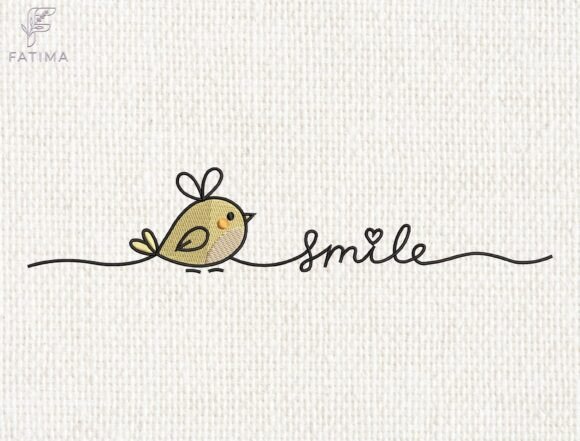
As an embroidery designer who’s stitched thousands of boutique apparel pieces—from limited-run sweatshirts to seasonal tote drops—the first thing I look for isn’t just technical precision, but personality. Smile Bird Embroidery Design delivers that instantly. It’s not loud or ornate; it’s quietly confident. A round, soft-edged yellow bird perched on a slender wire—clean lines, gentle curves, and subtle charm. This is inspirational embroidery with restraint: neither cutesy nor clinical, but warm, approachable, and unmistakably handmade in spirit. For a small shop building visual consistency across products, Smile Bird Embroidery Design feels like a signature element waiting to be repeated—not as repetition, but as rhythm.
How It Performs Across Real Apparel Surfaces
I tested Smile Bird Embroidery Design across six garment types I regularly produce for my own boutique brand and client collections: neutral heather sweatshirts, blush pink hoodies, charcoal denim jackets, ivory t-shirts, black fleece-lined totes, and oversized oatmeal crewnecks. On each, it held its own—not as a filler motif, but as a focal point with quiet authority.
- Sweatshirt embroidery: Perfect for left-chest placement on midweight cotton-poly blends. The design’s low stitch density (evident from the clean wire line and open negative space) prevents puckering—even without heavy cutaway stabilizer.
- Hoodie design: Works beautifully centered just above the pocket or subtly on the sleeve cuff. Its minimalist scale avoids overwhelming the relaxed silhouette.
- T-shirt embroidery: Ideal for lightweight jersey when paired with tear-away stabilizer and a sharp needle. The roundness of the bird reads clearly even at 3.5" wide—no loss of character at smaller sizes.
- Tote bag design: Looks especially elegant on natural canvas or unbleached cotton. The wire detail catches light just enough to add dimension without competing with texture.
- Denim jacket accents: Stitches cleanly over medium-weight denim when using medium-cutaway stabilizer. The yellow bird pops against indigo without needing neon thread—just high-contrast matte cotton.
- Seasonal lifestyle wear: Paired with cream knits or oatmeal fleece, Smile Bird Embroidery Design reads as cozy optimism—not childish, not ironic, but genuinely uplifting.
Where to Place It—and Where to Pause
This isn’t a one-size-fits-all design. Its elegance depends on thoughtful placement. I recommend Smile Bird Embroidery Design for chest, sleeve, or back yoke placements—but avoid tight curves like collar bands or deep V-necks unless you’ve tested the hoop rotation and fabric stretch. On ribbed fabric (like some hoodie cuffs), reduce tension slightly and use a light tear-away + topping combo to prevent sinking into grooves.
For dark garments, stick with matte yellow or buttercream thread—not metallics or glossies—so the bird stays soft and cohesive. On stretchy fabrics (think French terry or performance blends), always pre-test with your exact stabilizer stack. Smile Bird Embroidery Design’s delicate wire relies on stability; if the base shifts mid-stitch, the balance of the composition suffers.
Why It Strengthens Boutique Brand Identity
In today’s saturated handmade market, customers don’t just buy apparel—they buy alignment. Smile Bird Embroidery Design supports that. It’s inherently shareable: soft enough for Instagram flat lays, distinctive enough for Pinterest saves, and refined enough for lifestyle product photos where texture, light, and intention matter. When used consistently across sweatshirts, totes, and tees, it becomes a visual shorthand for your brand’s ethos—thoughtful, joyful, grounded.
For Etsy sellers and small shop owners, this matters deeply. A recognizable, non-generic motif like Smile Bird Embroidery Design increases product recognition across listings. Buyers begin to associate that little yellow bird with your care in curation—not just your stitching skill. That builds trust faster than any banner headline.
Practical Notes Every Embroidery Designer Should Check
Before digitizing or stitching for production, here’s what I verify every time with a Creative Fabrica embroidery file like Smile Bird Embroidery Design:
- Run a test on scrap fabric matching your final garment’s weight and stretch.
- Confirm stabilizer choice—especially for fleece or ribbed knits where movement can distort fine wire elements.
- Review thread color contrast: yellow on navy reads differently than yellow on oatmeal. Adjust thread hue slightly if needed for harmony.
- Check hoop size compatibility—Smile Bird Embroidery Design fits comfortably in a 4” x 4” hoop, but verify before nesting multiple designs.
- Inspect stitch density visually in your embroidery software—look for smooth transitions on the bird’s curve and consistent fill on the body (no skipped areas).
- Compare placement options on a printable mockup—chest vs. sleeve vs. back—to see how scale and context shift perception.
- Review Creative Fabrica’s licensing details carefully: Smile Bird Embroidery Design is listed under Inspirational and Embroidery categories, and commercial use is permitted—but always confirm current terms before selling finished apparel.
Final Thought: Less Is Truly More
Smile Bird Embroidery Design doesn’t shout. It smiles—gently, sincerely, memorably. In a landscape full of overdesigned logos and aggressive slogans, its quiet positivity lands with surprising weight. For apparel decorators building intentional collections—not just inventory—it’s more than a machine embroidery design. It’s a tone-setter. A mood anchor. A tiny, stitched reminder that craftsmanship and kindness belong together on every garment we make.